Remote Work Digest: August 29, 2023

The latest on all kinds of information, news, and resources that help you make working remotely better.

11 Skills Small Business Owners Need To Have in 2023 | Catherine Collins, Finance.yahoo.com

Whether you’re a solo entrepreneur or the CEO of a small team, small business owners in 2023 need to have a range of skills in order to compete effectively in the marketplace. Here are eleven of the most important.

Communication

It’s ironic that we have so many different ways to communicate with colleagues and customers, yet so much gets lost in translation and tone. Improving communication skills can go a long way in meeting customer needs, as well as creating a healthy work environment.

Digital Marketing

Learning about growing an email list, marketing to customers, copywriting and running social media ads can help entrepreneurs grow their small businesses over time.

Money Management

Managing money, budgeting, organizing receipts and paying quarterly self-employment taxes are necessary parts of running a business. A business owner who wants to grow and thrive in 2023 would be wise to take the time to understand their day-to-day business finances.

Emotional Intelligence

Emotional intelligence, also known as EQ, means you can understand emotions. Someone with a high EQ can sense other people’s feelings and empathize with them when necessary. It’s a crucial skill for a business owner to have, especially if they are interacting with customers or employees on a daily basis.

Time Management

Unlike a 9-to-5 job, it’s hard for business owners to completely log off for the day. Running a business takes significant mental space, and learning better time management skills can help with work/life balance as well as productivity.

Innovation

It’s important for business owners to think dynamically about their products and services and regularly think about ways they can better serve their customers.

Networking

Attending conferences and industry events is a great way to learn about innovations in the field and also meet fellow business owners. It’s also important to use tools like LinkedIn and local meetups to collaborate and cross-promote.

Remote Team Management

Teams that typically interacted in office buildings suddenly had to navigate the world of remote work. Because so many workers now enjoy the flexibility of working from home, understanding how to manage teams in a remote environment is a useful skill for business owners in 2023.

Cultural Competence

The world is a diverse place, and as such, it’s important for businesses to have a diverse workforce and serve diverse customers. Getting training to ensure your business and business practices consider diversity and inclusion is a respectful way to ensure you can attract top talent and create a successful work environment.

Resilience

Running a small business can be emotionally exhausting, and the path isn’t linear. You could have your best months followed by your worst months and vice versa. What typically contributes to a small business’ success is grit and resilience.

Final Thoughts

Only with continuous learning and resilience can businesses continue to find success in a new landscape. The business world has changed dramatically, especially since the pandemic, and business owners need to find new ways to market, network, communicate and lead to thrive in 2023.

10 ways to deal with and manage stress at work | Rich Henson, Hrmorning.com

Daily stress, like meeting deadlines and providing deliverables, is challenging enough. But when stress becomes chronic, it’s overwhelming and harmful to your physical and mental health.

10 steps to avoid work stress

1.Identify what stresses you

It’s essential to learn what’s causing your stress at work. Using “mindfulness” techniques at work can help you identify what raises your stress levels.

A great way to stay mindful is to keep a journal, even if only for a brief period, like a week or a month. At moments when you’re feeling particularly stressed, write down a quick description of the situation. You‘ll get better – and faster – at it.

2. Set boundaries

Allowing work to take over your life is bound to create stress. And the most common way for this to happen is by routinely replying to emails after hours. It’s toxic. And when after-hour responses become the norm, you’re the only one who can put your foot down.

Step one is to set firm boundaries. Set an example by respecting your team’s lives outside of work. And don’t send or encourage work emails or communications late in the evenings or on weekends.

3. Develop healthy responses

Many of us tend to fight stress with food or alcohol, so do your best to make healthy choices when you feel the tension rise. Any form of physical activity is a great stress buster (e.g., yoga, walking, swimming, gardening, cleaning).

Add quality sleep to your list of healthy things to do. Build sound sleep habits by limiting your caffeine intake late in the day and minimizing stimulating activities, especially screen time, before bed.

4. Take quick breaks

Simple quick breaks that put distance between you and the source of your immediate stress can work wonders.

Walk to your car to “get something.” Watch a two-minute video on YouTube or TikTok. Call a friend and say “Hi.” Go to the bathroom. Any quick distraction that can remove you from a stress-creating situation helps.

5. Stop trying to be perfect

Naturally, you want to “give it your all” when it comes to your career. But try not to be perfect at every aspect of your job. The top performers and hardest workers tend to deal with stress the most.

Self-awareness is your best friend in these situations. Whether it’s accepting that no one is perfect or realizing some people can do some things better than you, if perfection is your obsession, try to get a handle on it.

6. Get organized

Organizing your work life is a great stress reducer. Develop an organizational plan that’s easy to maintain, and stick with it. A basic component is a good filing system that works. There are countless examples online. Find one and use it.

This will save you time in the long run by making everything easily accessible. Consider creating rituals for your daily life. These may include personal routines like making tea before work or going on a walk every day during your afternoon break.

7. Don’t be afraid to ask for help

The workplace of the 21st century is becoming increasingly competitive and stressful. It’s more important than ever to have a mentor or coach to guide you through your career, especially if you feel unsure of your next steps.

8. Talk to your supervisor

Employee health has been linked to productivity at work, so your boss has an incentive to create a work environment that promotes employee well-being. Start by having an open conversation with your supervisor.

The purpose of this isn’t to lay out a list of complaints, but rather to come up with an effective plan for managing the stressors you’ve identified. This will allow you to perform at your best on the job.

9. Get comfortable

You might not notice you’re stressed if you’re sitting in an uncomfortable chair for a few minutes. But what if you practically live in that chair at work? You might have a sore back and be more reactive to stress because of it.

Even small things like noises or a colleague’s humming can be distracting and cause feelings of low-grade frustration. Do what you can to create a quiet, comfortable and soothing workspace.

Practice these 10 stress relievers

  1. Count to 10 before you speak or react.
  2. Take a few slow, deep breaths until you feel your body start to unclench.
  3. Go for a walk, even if it’s just down the hallway and back.
  4. Try meditation or a prayer to reset.
  5. If it can wait, let it sit overnight.
  6. Break down problems into smaller parts and tackle them one step at a time.
  7. Hug a friend.
  8. Find a colleague you can confide in.
  9. If you owe your mom a phone call, take a few minutes to call her
  10. Do something simple you’ve been putting off, like making that dental appointment.

Boosting Employee Productivity: Effective Strategies for Success | Richard, Streetwisejournal.com

From maintaining a great office environment to leveraging modern tools, we’ve got you covered with a variety of strategies that will transform your workplace into a productivity powerhouse.

Strategy 1: The Power of a Great Office

Maintaining a Clean Environment: Commercial Cleaning

A clean and organized office is the foundation of employee productivity. When employees walk into a well-maintained environment, they feel valued and motivated. Consider hiring a commercial cleaning service to ensure that your office space is consistently spick and span.

Strategy 2: Flexible Work Arrangements

Embracing Remote Work: Work-From-Home Options

Granting team members the flexibility to operate from home, even intermittently, can foster improved job contentment and a harmonious work-life equilibrium, elevating their overall output.

Strategy 3: Invest in Professional Development

Continuous Learning: Training and Skill Enhancement

Allocate resources to skill-enhancing endeavors, seminars, and instructional sessions, enabling them to refine their expertise and stay abreast with sectoral shifts. When they sense the firm’s commitment to their progression, their drive to excel intensifies.

Strategy 4: Encourage Regular Breaks

Mindfulness Breaks: Meditation and Relaxation

Encourage your employees to take regular breaks throughout the day. Short breaks can actually enhance focus and creativity. Consider setting up a relaxation or meditation space in your office where employees can recharge their minds.

Strategy 5: Embrace Technology Tools

Utilizing Productivity Apps: Task Management and Collaboration Tools

From task management apps that help organize daily to-do lists to collaboration tools that streamline teamwork, these tools can transform how your employees work. Platforms like Trello, Asana, and Slack facilitate efficient communication and task tracking, ensuring that everyone is on the same page and tasks are completed promptly.

Strategy 6: Recognition and Rewards

Celebrating Achievements: Employee Recognition Programs

Feeling valued and appreciated is a strong motivator. Implement employee recognition programs to acknowledge and reward outstanding performance. This can range from a simple “Employee of the Month” award to bonuses or additional time off. 

Strategy 7: Clear Communication and Goal Setting

Setting Expectations: Transparent Communication

Clear communication is the cornerstone of a productive workplace. Ensure that your employees are aware of their roles and responsibilities, and that they understand the company’s goals and objectives. Regularly communicate updates and changes to keep everyone informed and aligned. 

In conclusion

Boosting employee productivity isn’t about enforcing strict rules or pushing your team to the brink. It’s about creating an environment that nurtures their growth, respects their well-being, and leverages modern tools and techniques to maximize their efficiency.

Essential skills for remote leadership | Thunderbird School of Global Management, Forbesindia.com
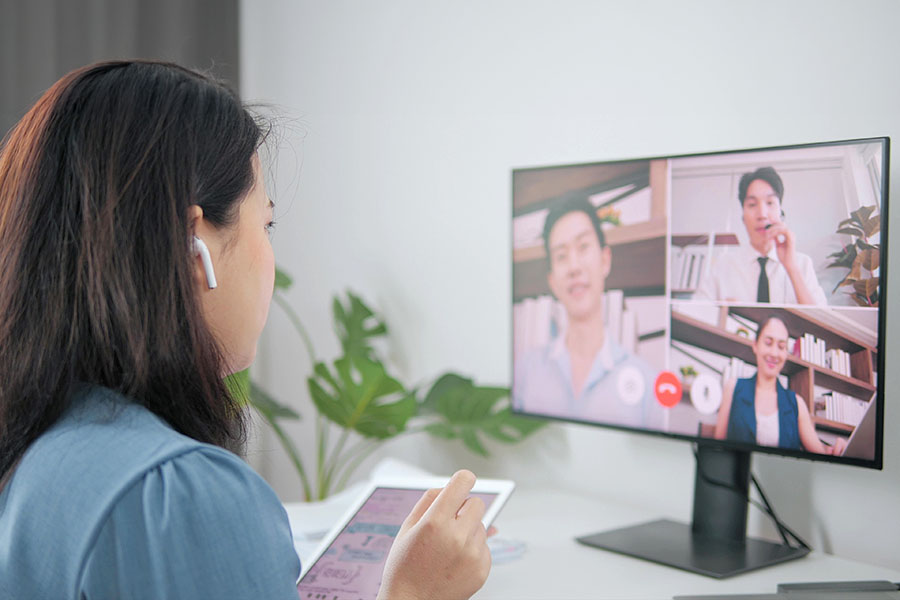
Back view of businesswoman talk with team business partner using video call on laptop discuss work project online. Video conference, Online meeting concept

Common problems leaders experience when managing remote teams and actionable strategies to overcome them.

Remote leadership challenges

Remote leadership comes with a unique set of challenges that can make it difficult to manage a team effectively. One of the most significant challenges is communication.

Communication

The lack of in-person interaction can make it harder to build trust and rapport. Written communications can also make it difficult to ascertain tone and lead to misunderstandings and conflicts.

Lack of team cohesiveness

Effective teams work toward the same goal, utilizing each team member’s strengths to achieve results. This can be difficult to create in a remote environment, especially in teams with a mix of in-office and remote members.

Managing time zone differences

Managing remote employees that work from different time zones can be challenging. Something as simple as setting meetings suddenly requires extra planning and flexibility as workers from later and earlier time zones work to find a time that is neither too early or late.

Maintaining company culture

Having a positive company culture can even help recruit and retain workers, but maintaining it is difficult with remote teams. This is especially problematic when onboarding new employees.

Tracking productivity

Keeping workers productive is an important part of management, but how do you ensure productivity in remote teams? Shifting from measuring the number of tasks checked off a list to more remote-friendly measurements isn’t easy for many leaders, but it’s necessary.

Tips for managing remote teams

Elevate your communication skills

Improving communication skills can help remote leaders create a more supportive and collaborative work environment. It can also reduce the frustration that comes with misunderstanding tone or instructions.

Provide regular feedback

Your remote team needs more than a list of to-dos that get crossed off. They also need feedback. Providing regular feedback may happen organically when you work in the same office, but in a remote environment, it takes more effort.

Measure productivity differently

Productivity has traditionally been measured by the time a worker spends working and the number of tasks they complete. This approach to leadership is largely ineffective when managing remote employees. Reducing an employee’s worth to how many items they check off a list fails to properly value the impact of the work they complete.

Trust and build trust with your teams

Trust is an essential ingredient for building successful teams, especially in a remote environment. Unfortunately, it is one of the more difficult challenges faced by remote leaders and their teams.

Set clear expectations

Setting clear expectations is essential for achieving success in any organization, but it is especially important for remote teams. When workers understand what is expected of them, they are better able to focus their efforts, stay on track, and meet performance standards. 

Establish the team’s purpose

When setting expectations for your remote team, start by defining specific goals and objectives that align with the organization’s mission and vision.

Practice empathy

Leaders may be obligated to focus on business objectives, but that is not where the job description ends. We are humans first and employees second, but leaders sometimes forget this due to the pressure involved in reaching company goals. As a remote leader, it is even easier to forget that the people on the other side of the screen are real humans juggling life and work.


Remote Work Digest: July 30, 2023

The latest on all kinds of information, news, and resources that help you make working remotely better.

Five Steps To Jumpstart Your Employee Digital Transformation Journey | Anshul Sheopuri, Forbes.com

Transformations rarely achieve their full potential. Being intentional about the accelerators to jumpstart digital transformation of your employee journeys can maximize your chances for success. Here are five steps to get started.

1.Start with the business and user problem.

We all experience products and services with a compelling value proposition day to day, whether it is a smartphone, cloud storage or an electric vehicle. What is common across these is that they solve a user problem differently. For example, as opposed to simply making floppy disks smaller or the experience of transferring data with floppy disks better, cloud storage solutions get to the root of the user problem to store data at scale, securely, seamlessly and at low cost.

2. Create an employee digital storefront to unleash clarity and adoption.

Over the past decade, digital storefronts for customers have mushroomed across a variety of industries. While this has helped obfuscate organizational complexity to customers, in many cases, this has also resulted in too little incentive to simplify organizational structure and organize work around the customer.

3. Activate an operating model with user experience as the clue to galvanize the organization.

Just like software or product organization operating models have become more standardized with the competency areas around product management, development and design, other capabilities that organizations deliver, for example, accounting services, sales operations and human resources, need to operate with clarity of accountability points and structure. This is even more critical in moments of significant change and requires intentional moments of conversation and reinforcement:

• Co-creation with users and stakeholders.

• Continuous improvement with an outside-in lens.

• Candid feedback, creating safe spaces for difficult conversations.

• Celebration, coming together as a team to reflect and celebrate key milestones.

4. Diagnose and instrument root causes versus the symptoms.

Since the root causes span across process, technology and data management, the solutions need to be multifaceted as well, including automated data quality management, defined software testing process and user-centric journeys.

Quick wins matter. Communicate how progress is being made via improvements in data quality. But remember that the right quick wins that address root causes (versus only the symptoms) matter more.

5. Compliance is table stakes – set the bar with voluntary adoption of higher ethical standards.

Taking a compliance-centric approach is table stakes. Set the bar for your organization with voluntary adoption of higher ethical standards to future-proof your posture in line with the organization’s values. While this can feel daunting, remember that companies are at different points in this journey, and it can be helpful to work together to define common standards in new and emerging areas.

Employee journey transformations are a significant opportunity for employee experience and business outcomes. Being intentional about the right stepping stones can maximize the chances of success.

8 Reasons Why You Should Work a Full-Time Job Before Freelancing | Abigale Lim, Makeuseof.com

The allure of freelancing is undeniable. The freedom to work on your terms while earning a high income is undoubtedly appealing. But before you take the plunge into a full-time freelance career, consider the benefits of staying in a nine-to-five job first. Let’s explore why working a traditional full-time job before freelancing can set you up for long-term success as a freelancer.

1.Gain Practical Training

Working in a structured environment allows you to hone these skills. You can learn freelance skills by watching YouTube videos or enrolling in a course. But you’ll gain these skills much faster and get paid while learning if you work a full-time job first.

2. Get Help from Experience Colleagues

In a traditional work setting, you’re surrounded by experienced professionals from diverse backgrounds. Many companies have mentorship programs and feedback systems in place. Leveraging the knowledge and expertise of superiors can benefit your personal and professional growth.

3. Expand Your Network

Working full-time exposes you to a network of professionals. Clients, vendors, leaders, recruiters, and industry peers are your most beneficial professional connections. Building solid relationships with these individuals can open doors to future freelance opportunities.

4. Build Your Emergency Fund

Unstable income is one of the risks of freelancing, especially in the initial stages of your career. Since you don’t have an employee-employer relationship with clients, you can lose your source of income without warning.

A full-time job provides a stable income. It also offers benefits like paid leaves, bonuses, and health insurance plans. As a freelancer, you don’t get paid if you go on vacation. You don’t get paid if you’re sick and can’t work. An emergency fund that will last at least six months will lessen your stress during these moments.

5. Build a Strong Work Ethic

Soft skills such as self-discipline and time management are essential skills of a successful freelancer. As a freelancer, you set your work schedule and choose your projects and clients. It’s easy to procrastinate and lose sight of your workload. The work ethic you develop in your full-time job will be crucial to your success.

6. Learn From Your Mistakes

Working full-time as a young professional provides a safe space to learn and grow from these errors. Many companies offer free training for their employees. Your colleagues and superiors can also provide feedback, helping you avoid similar pitfalls in your future freelance projects.

7. Build Your Portfolio

A diverse and impressive portfolio is a freelancer’s best marketing tool. It attracts potential clients and displays your capabilities. While working full-time, you can work on various projects that can expand your portfolio.

8. Test the Freelance Waters

There are many simple freelancing jobs you can learn easily. Take time to discover the role that fits your skills best. As you gain confidence and experience, you can gradually transition to freelancing full-time.

Embrace the learning opportunities that come with a full-time job. When the time is right, you can venture into freelancing with confidence. If you’re sure that freelancing is for you but can’t let go of the benefits of your traditional job, consider doing both. Holding a freelance job while freelancing as a side hustle works for many professionals.

Tips to avoid loneliness when working from home | Rhymer Rigby, Fm-magazine.com

The COVID-19 pandemic accelerated a shift to remote work that was already happening. But while people may love the lack of a commute and the freedom, they may also miss the social side of the office. A 2021 survey of 2,000 UK and US office workers by Kadence, the hybrid workplace software company, found that 81% of workers under the age of 35 and 64% of workers over 35 were concerned about loneliness if they were to continue to work from home full time. Other research has drawn links between tech-enabled distance working and loneliness. So, if you are feeling isolated while working remotely, what can you do about it?

Get outside

If you were at work all day, you wouldn’t just sit at your desk from nine to five. So don’t do this at home. Take a break and get out of your home office.

Set up social media groups

One of the problems with remote work is that you miss the informal chit-chat and serendipitous meetings you have in the office. So, re-create these on social media apps. The ability to make off-the-cuff comments and chat informally is invaluable, and messaging apps significantly reduce the barrier to informal commenting (an email, by comparison, is quite formal).

Attend Zoom or Teams meetings

As much as we can moan about video meetings, they do capture some of the feeling of being together in person. We can see our colleagues and read their facial expressions and feel to an extent that we’re with them. 

Make phone calls

The rush to video during the COVID-19 pandemic (and an addiction to messenger apps) means the phone often gets overlooked as a form of communication. But if you have sent a dozen messages or emails, really, you should be making a phone call. It can be far more efficient — if someone doesn’t quite understand what you’re asking, you can clarify what you mean in real time. 

Don’t always work at home

Just because you’re working remotely doesn’t mean you always have to be in the spare bedroom. Investigate other options such as coffee shops, co-working spaces, or libraries. These will deliver an office-like experience. And if you go once a week, even if you don’t know people at first, you’ll soon be on nodding terms with other regulars. 

Encourage your company to have meetups

There is no substitute for meeting face to face. But the good news is a little goes a long way. You only have to meet up with colleagues once every few months to improve your virtual relationships and make them feel deeper and more meaningful. 

Consider a pet

If you’re in it for the long run, a dog or cat can make a big difference — and, what’s more, they’ll never try to micromanage or take credit for your work.

Don’t be afraid to admit you’re lonely

Talking and sharing helps enormously, and you may discover other remote workers have the same problems you have. Your company may also be able to provide you with help under its mental health policy.

Avoid overwork

One of the mistakes many people make when working remotely is believing that they have to fill every moment with work. But you don’t have to use the time you once spent commuting chained to your desk, and you can take a lunch hour. Measure what you do by work output, not hours put in. 

Talk to your company about coming in

Employees often ask to be allowed to work from home two or three days a week. So, assuming the office isn’t hundreds of miles away, why not turn this on its head and ask if you can “work from work” once a week? Loneliness can have an enormous negative effect on both your mental health and your productivity. If you are suffering from it, tell your employer. They are likely to want to help in any way they can.

9 pro tips for creatives working from home | Tina Touli, Creativebloq.com

It’s easy to plonk a laptop on the dining table or coffee table and work away, but that probably isn’t going to be comfortable in the long run, and your work may suffer too. Below, the art director and designer Tina Touli offers nine pro tips to consider when honing your home work set up, from your surroundings to your screen (see our pick of the best 4K monitors for options there).

Manage screen brightness

Work in intervals on maximum brightness so that you can get the best out of your colours without damaging your eyes.

Keep organised

Work from everywhere without any technical difficulties by keeping mobile hard drives nice and organised so you can work on your files without taking over your memory!

Invest in a good screen

Your laptop is your friend for when you are out and about, but a great screen will pay dividends when it comes to working in your studio. I recommend a Dell UltraSharp; the colours are so accurate I have barely touched the default settings. 

Don’t be afraid of contrast

Don’t be afraid of contrast – Full black or white can be daunting, but be brave!  I love high contrast, even B&W, but colours are my favourite. Vivid bright colours.

Light up your room (and your screen)

With bias lighting behind your screen and some clever atmospheric lighting in the room, you can create some separation between work and leisure.

Keep your environment neutral

Keeping your environment neutral can bring out the colour in your work. I tend to keep the studio space more neutral in terms of colour (of course there are little pops of colour around) and even my desktop wallpaper is just a solid grey colour. I feel like it helps me better shape/check the colour palette of every project I am working on.

Listen to music

Science says 60-70 bpm playlists are best to maximise concentration but I love everything from rock music to house. The music I choose depends on my mood, the project I am working on, even the time of the day, but music for working is definitely key.

Print your work

Screens like a Dell UltraSharp allow us to see a lovely range of colours that are super close to what you get on print, something very important for multidisciplinary designers like myself.

Consider a standing desk

Standing desks are your friend, especially if you need to draw on a tablet. I love using a sitting desk when working on the computer but a standing one when I experiment by hand, blending the analogue and the digital worlds (see our guide to the best standing desks for possible options).

Remote Work Digest: May 25, 2023

The latest on all kinds of information, news, and resources that help you make working remotely better.

3 Ways Employers Can Optimize Hybrid Work | Michael Timmes, Forbes.com

Because hybrid work appeared in the business world so recently, most organizations continue to tweak their hybrid work programs to optimize the returns. Optimization of hybrid work will require organizations to focus on employee engagement and collaboration, place trust in workers and frontline managers and balance employee preferences with business needs.

1.Prioritize teamwork and high engagement.

Even within the same organization, different teams may have different optimal working environments. On teams where workers complete most of their work independently, one or two in-office days could be sufficient to promote collaboration and culture. However, other teams may work together frequently, making three in-office days necessary to maximize workflow.

To find that balance, HR teams should attempt to categorize roles across an organization as independent or collaborative. If the majority of an organization’s workers fall onto one side or the other, then the simplest solution could be a standardized hybrid schedule for everyone.

2. Rely on the judgement of workers and managers.

In general, employees want to perform at a high level, and managers want to help employees accomplish their goals. Many organizations may find it beneficial to implement a hybrid system, and those that do should listen to feedback and trust teams to make minor adjustments to their own schedules.

For example, an organization may set Tuesday through Thursday as designated in-office days. However, if a team realizes that Mondays in-office are more critical to productivity than Thursdays, management should be open to that experiment. There does need to be a process in place for any adjustments, so teams feel they are treated fairly. However, as long as each compromise has clear reasoning, employees often appreciate the added flexibility.

3. Keep business needs in mind.

Communication around schedules should begin well before employee onboarding. Recruitment teams should emphasize the requirements of the job from the beginning of the hiring process, including in online job posts. This will encourage candidates who feel comfortable with an on-location schedule to apply for the role.

Recruiters may fear that non-hybrid work schedules decrease competitiveness for job candidates. However, organizations should remain firm about the employee schedules necessary to support customers or clients. Even for employees, hybrid work is not everything. The same Gallup survey cited above also found that employees would not accept a salary reduction in exchange for work location flexibility.

Conclusion

By promoting engagement and collaboration, extending trust to teams and prioritizing business needs, organizations can manage hybrid work systems for optimal performance.

Tips to transition from working-from-home to in-person | Alberta Prime Times, Townandcountrytoday.com

As companies push for a return to the physical office, the stress and anxiety of adjusting to a new routine can be overwhelming. Don’t let the transition catch you off guard – learn how to cope and thrive back in the office environment.

Dr. Haley Perlus, Sport and Performance Psychology Ph.D. offers these tips for making the transition back to the office.

Create a routine.

Establish a new routine that aligns with your work schedule, including a set time to wake up, have breakfast, and get dressed. This will help you mentally prepare for the workday and maintain a sense of structure.

Don’t ditch the workout.

It’s important not to let go of healthy habits like exercise that you developed while working from home. Exercise not only maintains overall health but also reduces stress and improves productivity.

Connect with colleagues.

As you return to the office, take the opportunity to connect with colleagues and build relationships. This can help foster a sense of community and make the workplace feel more welcoming.

Start meal prepping.

Meal prepping can be a game-changer when returning to the office after working from home. It helps save time, money and reduces stress by eliminating the need to decide on what to eat during the workday. Additionally, it can also promote healthier eating habits by enabling you to prepare nutritious meals in advance, ensuring you have access to healthy food options throughout the day.

Prioritize your mental health.

The transition can be overwhelming, so it’s important to take care of your mental health by practicing self-care and seeking support if necessary. Making time for activities like meditation, exercise, and therapy can help reduce stress and promote a healthy work-life balance.

Update your work space.

Adding plants, colorful décor, and comfortable accessories like a cozy chair or desk lamp can help create a more inviting workspace. Personalizing your work area can also boost morale and improve your overall mood and motivation while at work.

10 jobs with the most remote work opportunities | Diana-Ashley Krach, Stacker, Columbustelegram.com

Beyond productivity, employees report greater satisfaction with their remote work. That’s partly due to improved work-life balance. Research shows that more than 56% of remote or in-person employees can pause their work if needed. That flexibility, paired with remote employees no longer having to devote hours to commuting, makes telework very attractive. However, it’s still practical to note the potential obstacles, especially regarding technology. Creating a technology section on your resume can help hiring managers understand your ability to thrive with telework. For example, understanding the platforms that allow virtual meetings is essential to remote work.

Despite the challenges, many industries prove this can be a better work setting than standard offices. Keep reading to discover which jobs offer the most remote work opportunities.

#10 Project management specialists

Project management specialists help managers and their teams meet company baselines and goals. Some specialists have extensive knowledge of state and federal employment regulations and can examine an organization’s human resources procedures. 

#9 Computer and information systems managers

Modern companies rely heavily on computers and internet communications and need them to be secure and reliable. Computer and information systems managers handle the details of keeping these vital machines and networks running smoothly.

#8 Lawyers

Not every lawyer spends all day in court. And even if they do, many civil court proceedings are now available through virtual platforms, making it easier for more lawyers to work remotely. Long before the pandemic began, one law firm launched with no physical offices; it is now one of the 200 top-grossing law firms in the country.

#7 Software developers

Software developers look at each piece of a software system like a puzzle, designing each section and determining how they fit together.

#6 Management analysts

A management analyst gets the call when a company needs an efficiency update. These analysts evaluate operations to help their clients boost revenue and reduce costs. Part of that process involves interviewing staff, which they can do remotely, along with reviewing the company’s financial records.

#5 Architectural and civil drafters

Those with an advanced degree in architecture, engineering, or construction management and a healthy dose of creativity may be well-positioned for remote work. Depending on a drafter’s experience level, a typical day might include developing detailed plans and drawings for commercial buildings and construction projects. Those projects can consist of essential highways and sewage disposal systems, and drafters must conduct extensive research about any technical aspect that could impact designs.

#4 Market research analysts and marketing specialists

Before an organization launches an advertising campaign, it brings on a market research analyst to save time and money. Analysts thoroughly research regional, local, and internet markets to determine a product’s or service’s viability. With that insight, analysts can figure out how well a product will sell or how a campaign will perform.

#3 Software quality assurance analysts and testers

Software quality assurance analysts and testers develop ways to look closely at software systems and identify problems. Through documentation of those defects, analysts can create a bug-tracking system and report any issues to web or software developers. Working with those developers closely, an analyst can review software designs and help plan for modifications and improvements. Because this job requires minimal supervision, it fits nicely into a remote work environment so long as the analyst can adhere to aggressive deadlines.

#2 Sales representatives, wholesale and manufacturing, technical and scientific products

Sales representatives of wholesalers and manufacturers possess specialized knowledge about how products and services can best benefit their customers. They also provide price quotes for products and services and generate contracts for purchases and sales. Building relationships is a big part of this job, which is why networking is integral.

#1 Web developers

Website developers build and maintain the functions and security of a site with regular tests, audits, and improvements. They are also responsible for communicating and coordinating with team members about content, visual presentation, and services provided on the website.

6 Employees Productivity Red Flags and How to Fix Them | Henry Smith, Techbullion.com

The team of employees is the most valuable asset in any organization. Employees react differently to the world around them. External and internal factors can negatively affect your team’s productivity. Organizing a team building activity can help every employee relax, bond, and accommodate each other for better productivity in the future.

Employees are constantly at loggerheads

It is not unusual for employees to disagree and see different issues from divergent points of view. However, when disagreements get in the way of meaningful criticism, it’s time to get your team outdoors. Conflicts can be between one department and another or between members of the same working group. A successful manager can recognize when in-house conflict management solutions are futile. 

Outright lack of collaboration and communication

Teamwork helps the organization achieve more than each individual can. Better performance, therefore requires members to effectively communicate for members to consult, air their concerns and get reliable feedback for decision-making. However, if you realize your team deliberately refuses to relay information or work together, engage in a team building event.

Toxic work culture

A toxic culture can be lack of reliable communication, disorganized workflows, and unexplained delays. Sweeping red flag signals under the carpet finally catch up with the company’s performance. High staff turnover and constant burnout are likely consequences of unbearable work culture.

Low morale to work

A keen manager should notice when the employees’ morale is gone. While your team members may not always report 100% unmatched output every day, a significant drop in work morale is obvious. The usual lively chatter may turn into a damp silence cutting across the departments. Other times, members may show no excitement about learning new approaches or turning down opportunities to become more efficient at work. 

A pattern of unending problems

Recurring issues that never seem to never get fully solved are a warning sign that all is not well with your team. Employees may feel like they’ve been warned or corrected a million times, indicating that more than mere talk is necessary.  Team building activities can help improve poor collaboration, clarify company goals, and define the boundaries of one department from the others.

Undefined boundaries

When members lack responsibility, nobody would be willing to take responsibility or volunteer to do menial tasks around the office. Undefined position boundaries may lead to abuse of roles and overall poor performance.

Take away

Noticing the red flags of a demotivated team unravels communication and relationship struggles among employees in an organization. Outsourcing a team building event organizer can save your organization untold losses and poor performance.

Remote Work Digest: April 29, 2023

The latest on all kinds of information, news, and resources that help you make working remotely better.

Prioritizing Employee Health: Why it’s Essential for Business Success | Mark Allinson, Roboticsandautomationnews.com

Medical team standing in the hospital corridor

Employee health and wellbeing should be a top priority for businesses, both large and small. Companies that prioritize the health of their employees reap numerous benefits, including increased productivity, reduced healthcare costs, and improved employee satisfaction.

The Cost of Ignoring Employee Health

Ignoring employee health can have a significant impact on a company’s bottom line. Unhealthy employees are more likely to experience absenteeism, lower productivity, and higher healthcare costs.

The Benefits for Prioritizing Employee Health

Prioritizing employee health has numerous benefits for businesses. First and foremost, healthy employees are more productive. When employees feel good, they are better able to focus and concentrate on their work, resulting in higher quality work output.

Strategies for Promoting Employee Health

There are numerous strategies that businesses can implement to promote employee health. One of the most effective strategies is to provide wellness programs that encourage healthy behaviors. Wellness programs can include gym memberships, healthy eating options, and stress management resources.

The Significance of Mental Well-Being at Work

Businesses should prioritize mental health by providing resources such as counseling services and employee assistance programs. Additionally, promoting work-life balance and reducing job stress can help to prevent mental health issues from arising in the first place.

Building a Culture of Health

To truly prioritize employee health, businesses must build a culture of health. This means creating an environment where healthy behaviors are encouraged and celebrated. A culture of health can be built by providing healthy food options, encouraging physical activity, and promoting work-life balance.

The Role of Leadership in Employee Health

Leadership plays a crucial role in promoting employee health. Leaders must set an example by prioritizing their own health and wellbeing. Additionally, leaders should communicate the importance of employee health to their teams and provide resources to support healthy behaviors.

Leadership Role

Prioritizing employee health is essential for the success of any business. By promoting employee health, businesses can increase productivity, reduce healthcare costs, and improve employee satisfaction.

Strategies for promoting employee health include providing wellness programs, prioritizing mental health, and building a culture of health. Ultimately, leadership plays a critical role in promoting employee health, and businesses must prioritize employee health to achieve long-term success.

7 Popular Productivity Practices for Startup Founders | Abdo Riani, Forbes.com

Here are several productivity practices popular in the tech startup world that can help you get more done in less time:

1.Prioritize Ruthlessly

When you are juggling multiple projects, deadlines, and stakeholders, you have to make tough decisions about what to focus on at any given time.

To prioritize efficiently, make a list of all your tasks and projects and mark them by priority. Focus on the most important tasks first and delegate or defer the rest.

2. Use The Pomodoro Technique

This technique is very efficient for people who struggle to stay focused for long periods of time. Bunching up your distractions (e.g. social media browsing) in a short time period – the break, and having a timer to signal when it is time to go back to work makes it easier to control yourself and waste as little time as possible.

3. Block Out Distractions

To block out distractions, identify what distracts you the most (e.g. social media, email notifications) and then take steps to eliminate or minimize them.

4. Practice Time-Blocking

Time-blocking is a productivity technique that involves scheduling specific blocks of time for different tasks or activities. Tech startup founders often use this technique to ensure they are making progress on their most important projects while still leaving time for other commitments like meetings or networking events.

To practice time-blocking, create a schedule for your day or week that includes specific blocks of time for different tasks or activities, and make sure not to break up your deep work blocks with meetings or other distractions. For example, you can block out 4 hours of your work day for deep work and another 4 hours for meetings and communication.

5. Automate Repetitive Tasks

Try to streamline your workflow and save time. Try out automation tools to take care of repetitive tasks like data entry, social media posting, or email management.

6. Set Goals and Deadlines

A crucial part of being productive is to judge accurately how productive you have been. At the end of the day, results are what matters, not how much you worked. To see if you are on the right track, use KPIs to measure your progress objectively and try to evaluate if your expectations were met. If your results are poor, consider pivoting and changing up what you are concentrating on.

7. Practice Self-Care

Startup success is a marathon, not a sprint. Being insanely productive for short periods of time at the cost of being unproductive in the long term is a bad strategy.

Get The Home Office You Need With These 5 Tips | Navneet Vyasan, News18.com

It’s time to revamp the space that will keep you motivated enough the entire day. Here are a few decor tips to help you change how the area looks—

Focus on functionality – Make sure that your space has enough storage if your work involves the use of equipment or a lot of paperwork and books. The desk should also have enough space to keep your laptops, and other reference materials in one place.

Think about comfort – Sitting for long hours can lead to fatigue, back pain, and other issues. You might want to get a comfortable chair that is suited for your posture and back.

Location – If you have enough space, set it up outside your room, which will help you change the setting you are in. One can also set it up near a window or balcony for some fresh air and sunlight. All in all, you should not feel suffocated since you will be working all day.

Space-saving hacks – Most homes these days are short on space. Therefore, how about a makeshift workspace? You can try setting up foldable desks that either open up to a storage shelf or hang on the wall.

Personalise – Use stationery that you are fond of. Keep stress balls, snacks, or organisers handy. Even while choosing furniture, look for colours and textures that soothe your eyes. The more vibrant the home office looks, the more you are motivated to wake up each day to work.

While there is a wide range of designs and ideas to choose from, it is important to note what is right for you.

5 Workplace Strategies for Boosting Employee Engagement and Productivity | Pedro Barboglio, Forbes.com

Employee engagement is crucial for any business looking to maximize productivity and retain top talent. According to Gallup, companies with a highly engaged workforce are 21% more profitable. However, many small to medium-sized businesses struggle to create a work environment that fosters employee engagement and motivation.

1.Provide opportunities for professional development.

By investing time and money in employees’ professional growth, a business can reassure its employees that it is committed to its workforce and create a more motivated and engaged team.

2. Offer unique benefits to foster engagement.

Collaboration is a vital component of fostering engagement and creativity among employees. The more they collaborate and work in a team toward the same purpose, the more engaged they are likely to be.

3. Offer unique benefits to foster engagement.

In today’s competitive job market, offering unique benefits can be a powerful tool for attracting and retaining top talent. There are many ways to provide benefits that foster employee engagement and collaboration. 

4. Emphasize corporate social responsibility.

Corporate social responsibility (CSR) is becoming increasingly crucial for businesses looking to impact society and the environment positively. By prioritizing CSR initiatives, businesses can demonstrate their commitment to ethical and sustainable business practices, boosting employee engagement and motivation.

5. Prioritize employee mental health.

Employee mental health is vital in creating a positive and productive work environment. Businesses should prioritize employee mental health by offering resources such as counseling services, stress reduction programs or flexible work arrangements. This should come from the CEO; employees need to see that their CEO prioritizes their health and cares about their well-being.

Businesses can create a more engaged and motivated workforce by prioritizing employee engagement and implementing strategies such as those outlined in this article, increasing productivity and success. By investing in their employees, businesses can demonstrate their commitment to their workforce and create a culture of engagement and motivation.

Remote Work Digest: March 31, 2023

The latest on all kinds of information, news, and resources that help you make working remotely better.

How to Spot Quiet Quitting in Remote Work: 9 Tips | Barbara Ivusic, Makeuseof.com

The term “quiet quitting” has been used to describe people who have mentally checked out of their jobs. Instead of quitting, an employee chooses to do less—or do just enough to turn over a paycheck.

Most quiet quitters are out looking for new work or focusing their time and energy on projects outside of work. With remote work making it difficult to spot quiet quitters, there are some signs to look out for.

1.They Don’t Participate in Meetings

If you have a teammate who is selective about the meetings they attend, while knowing full well that their presence is required, you may have a quiet-quitter. While it may not be necessary to attend every meeting, if your team member is deliberately missing meetings to prove a point, it could mean their motivation has gone down.

2. They Don’t Join Events

If your team has organized leisure events online, such as gaming nights or virtual get-togethers, and people are uninterested in joining, there could be a number of reasons. They could have a lot on their plate already, or they have other commitments, but if team members are choosing to avoid every single event, it could be an indication that they’ve lost their desire to interact with their team.

3. They Withdraw or Check Out

If a team member suddenly seems indifferent about the company or their work, it could indicate that they no longer care about their position and are (likely) on the lookout for something else. While there are signs that tell you when somebody is ready to leave their job, it could be that there is a more prominent problem in their lives.

4. They Don’t Meet Deadlines

While there could be a number of reasons for the change in quality, such as personal problems, or burnout, consistently handing in work that is not up to scratch may mean that they are quiet quitting. There are smart ways to quit a job on good terms, but if your colleague no longer shows interest in the way their poor performance is perceived, they are likely on their way out.

5. They Act Disinterested

If your co-worker is cynical about the company culture, or disinterested in the work they are doing, it could indicate that they are getting ready to leave.

6. They Are Not Reachable

One of the reasons that people choose to quiet-quit is when they are feeling overworked, uninspired, or underpaid. One way to spot that someone has lost interest in their work is by the working hours they do.

7. They Isolate Themselves

In a remote working environment, it is still possible to perform to the best of your abilities. This includes staying active in chat channels, contributing ideas, and having an input in work processes. If your colleague is no longer participating in any of these things, and they’ve decided to isolate themselves both mentally and emotionally from workplace demands, it could be a sign that they are quiet quitting.

8. They Don’t Show Initiative

While there are a number of reasons why somebody is no longer showing initiative, a quiet-quitter usually doesn’t want to give more of themselves to a company they no longer care about.

9. They Might Be Burned Out

While burnout is not a prerequisite for quiet quitting, people who are overworked and underpaid could turn into quiet quitters. Companies with a high turnover, unclear expectations, and those that report a spike in workplace stress, might well produce some quiet quitters.

Understand the Reasons Behind Quiet Quitting

While it may be easy to jump to conclusions as to why somebody is quiet quitting, not every employee is the same. By looking deeper into the reasons why somebody is no longer contributing to their workplace like they used to, you may be able to get to the bottom of their behavior.

The 11 Best Places to Find Virtual Assistant Jobs | Jose Luansing Jr., Makeuseof.com

Although there are thousands of VA job opportunities online, you might find the numerous options intimidating. Newbies won’t even know where they should start looking. To jumpstart your job hunt, we’ll share the best freelance sites and platforms that offer legit, lucrative VA jobs.

1.Upwork

Upwork is arguably the largest freelance platform today. It has amassed 12 million active freelancers and 5 million paying clients worldwide since it started in 2013. The site also accommodates users from 180+ countries.

2. Fiverr

Fiverr is a widely known and trusted marketplace for freelance services. It has more than 3.42 million paying customers from 190+ countries who regularly hire various freelance virtual assistants.

3. LinkedIn

LinkedIn serves as the go-to social media platform for professional networking. Although the site originally catered to headhunters and job hunters, it has recently been more accommodating of freelancers.

4. 27/7 Virtual Assistant

24/7 Virtual Assistant primarily caters to newbie and intermediate VAs. It offers one-off gigs for administrative tasks like document filing, basic bookkeeping, simple web development, site maintenance, and customer service. Most projects will require 1 to 6 hours of availability a week.

5. Fancy Hands

Fancy Hands takes projects from SMBs and mid-sized enterprises, then divides them among its operations associates, otherwise known as VAs. Expect to see a broad range of orders. Apart from standard administrative services, you could also perform specific tasks, like making phone calls on behalf of clients, hunting for good shopping deals, or looking for hotel room discounts.

6. 99 Dollar Social

99 Dollar Social is a social media marketing agency that outsources content production to VAs on a per-project basis. It primarily needs content creation for short blogs and ads. So if you have copywriting experience, you’ll have a better shot at qualifying as a VA.

7. Belay

Experienced VAs who want consistent work with decent rates can consider Belay. It has a strict hiring process comprised of three parts: the initial screening, a skills assessment, and the final interview. Although application takes a while, qualified VAs are rewarded with good-paying, long-term clients.

8. Virtalent

VAs looking for long-term work opportunities should consider Virtalent. It’s a remote agency in the UK that provides SMBs and mid-sized enterprises with a broad range of administrative services, from appointment scheduling to prospecting.

9. Time Etc.

Another solid VA agency based in the UK is Time Etc. It provides US and UK startups and business owners with administrative services through skilled, all-around executive assistants.

10. Vicky Virtual

Vicky Virtual specializes in voice process jobs. It provides SMBs with skilled VAs who’ll serve as their virtual receptionist. Your daily duties will primarily revolve around taking complaints, answering queries, and reaching out to client business partners.

11. Virtual Gal Friday

Virtual Gal Friday provides VA job opportunities in the following specialized sectors: legal, medical, and accounting. If you pass, expect to focus on specific tasks. Most of its clients require VAs who’ll do paralegal work, answer phone calls, reach out to prospects, or manage internal company-wide messages all day.

Maximize Freelance Sites to Land VA Jobs Quickly

With the competition on VA freelancing platforms growing fiercer, expect to spend more time prospecting. Clients have a lot more hiring options nowadays. To outperform other applicants, prove your worth with a reputable online presence, impressive portfolio, and data-backed result analysis.

Steps to take when a remote job turns out to be more office-based | Rhymer Rigby, Fm-magazine.com

It is a very recent work problem. Late in the intense pandemic period or shortly afterwards, you changed jobs. The job you applied for was sold to you as largely or wholly remote. But slowly you have found yourself being asked to come into the office more and more. There’s always a reason, but now you’re in three or four days a week. This is not what you signed up for. So, what should you do?

Take a step back

Ask yourself how bad it really is. Were you sold a completely different job, or is it just a bit different? Think, too, about the role itself. Has it changed, or have external circumstances changed? Ask yourself if you’re being unreasonable and if this is instead just a minor annoyance.

Ensure you communicate about work expectations

Provide regular updates and communicate. Ensure you participate in chat, group calls, and video meetings — even those where your presence is optional. Yes, it’s a bit performative, but good work doesn’t always speak as loudly as it should.

Get some context

You need to determine where the change is coming from. Is it an edict from the CEO, who has decided to go office-based? Is it directed at just you or at the people who work for your boss? Sound out your colleagues. You might discover that many people are in the same boat, which is great — you have allies. One person approaching the boss is easy to dismiss, half the team less so.

Understand your boss’s position

This is key. If everyone is being affected by this, your boss might be shielding you from its worst effects. In this case, you want to make a kind of general complaint, rather than blame the boss.

Build your case

If, for example, you chose remote work because it fitted around childcare or other family commitments, these can be presented as extremely difficult to deal with. Worth pointing out, too, is that your commute is lost time and makes you less efficient. Stress the positives. You are calmer, more effective, and more productive if you are allowed to work partly or wholly from home.

Find independent evidence

One of the key arguments in favour of remote work is that it makes employees more productive. Thanks to the pandemic, a great deal of research has been done on this in the past few years. So look up some studies such as one from global not-for-profit Catalyst, which shows that remote employees are 68% more likely to report high organisational commitment, or one from PwC, where 57% of business leaders said remote or hybrid work boosted productivity, at least in the short term.

Ask for a meeting

This is an important issue and could materially impact your future at the company. So set up a proper meeting to discuss it. While you are asking your employer to stick to an agreement that was made, you need to be reasonable, too. So, think of some concessions that are relatively easy for you to make but would be important to them. You might commit to being in for certain days. Stress that you want to find a positive outcome for everyone and try to offer solutions.

If they say no

Here you have a number of choices, and these depend on whether the disagreement is with your immediate manager or is more of a company-wide issue. In the former case, if you get on well with those above your boss or others in the hierarchy, you might approach them informally. A more formal route would be to speak to HR. You could also get an employment lawyer to look over your contract.

And if this fails?

If you have a serious work issue that is proving intractable, it may be worth asking yourself if you might be happier elsewhere. You may decide the legal route is simply not worth it or that a company that is inflexible is not for you. Here, you are in a strong position. In many countries, there are more jobs than applicants. What is more, many companies are now very supportive of remote work and even when it’s entirely remote. Moreover, these tend to be forward-looking companies. So, start job hunting. And you can be completely honest in your interview when they ask why you want to leave your current job.

4 Reasons Why Happy Employees Are Good for Your Bottom Line | Deanna Ritchie for Due.com, Nasdaq.com

As a company, you likely prioritize the happiness of your clients and customers. After all, a happy customer can lead to repeat business, as well as new business through word-of-mouth referrals. However, if you don’t consider employee happiness, you could be inadvertently hurting the company’s financial performance. Though it may seem an unlikely budget line item, companies can expect to see several benefits as a result of investing in employee happiness.

1.Increased productivity

When you prioritize employee happiness, productivity follows. A study of U.K. telecom workers by researchers from Oxford University’s Saïd Business School found that employees who were happy at work were 13% more productive than those who weren’t. These call center reps didn’t achieve their increased output by logging more hours. Rather, they made more calls and earned more sales conversions because they were — you guessed it — happy.

2. More collaboration among co-workers

It’s not hard to imagine that employees would be more eager to team up with sunny-minded colleagues than gloomy ones. There’s research evidence to prove it. A WeWork/Ipsos survey of 4,000 workers in the U.S. and Europe found that over half of all respondents who reported themselves happy at work collaborate with five or more co-workers daily. Unsatisfied workers reported notably lower levels of collaboration — and this lack of collaboration costs businesses.

3. Stronger client and customer relationships

A happy employee can boost client relationships in several ways. First of all, the employee working with the client is the one who will leave a lasting impression. If they’re unhappy in the workplace, those feelings may seep into client meetings. Furthermore, an employee who is feeling overworked and stressed may not offer beneficial services to the client, as doing so could add to their workload. Not only do you miss the chance of an upsell, you risk not meeting the client’s expectations and ultimately losing them to a competitor.

4. Higher retention rates

As the Great Resignation vividly demonstrated, employees who aren’t happy at work won’t hesitate to leave. And that’s something business owners definitely want to avoid. In Gallup’s conservative estimate, a company will spend anywhere from one-half to two times an employee’s annual salary to replace the departed worker. That’s not petty cash.

Not only are there the hard costs of advertising the opening, interviewing candidates and training subsequent hires, there’s a significant cost in lowered productivity. It can take a year or more for a new employee to get fully up to speed, and the colleagues who are training them get pulled away from their own work, causing a further hit to productivity. Add in skill loss and damage to the customer experience, and it’s not hard to see why employee turnover is so harmful.

How to make your employees happy

Offer an attractive compensation package

A 2022 Willis Towers Watson survey found that 81% of employees who were pleased with their benefits would stick with their current employer for another two years or more. Just 51% of the displeased would say the same. To make your employees happy, your compensation package should be “competitive-plus.” Aim for the upper range of the prevailing salary scale, and consider adding additional perks (childcare reimbursements, transit pass discounts, etc.) to the expected health insurance, PTO and retirement benefits trifecta.

Make flexibility your watchword

Some employees might prefer a set schedule and the ability to leave work behind when they go home at night. Others may be more productive if they’re working from home a few days per week or even after so-called business hours. This variability argues against in-office or at-home requirements. Instead, give your employees some guidelines and trust them to choose the settings where they will be at their most productive.

You might even follow the lead of the more than 70 U.K. companies that are experimenting with a four-day workweek. When asked how the pilot program was going, 35 of the 41 survey respondents said their company would “likely” or “very likely” continue the policy past the trial stage. And why not? All but two of the companies had found that productivity had either stayed the same or gotten better. In fact, six of them reported that it had improved significantly.

Protect their time

An inexpensive — even cost-saving — way to improve employee productivity and happiness is to eliminate superfluous meetings and check-ins. Unnecessary meetings eat up valuable time and energy across the company. Instead of using recurring meetings to check on the status of a project, use project management software to stay up-to-date in real time instead.

Some meetings are necessary, but you can undoubtedly make them shorter and more efficient. Invite only those people whose input is necessary to make decisions. Others who simply need to be informed can be updated via email or other channels. Develop and pre-circulate a meeting agenda, and when meeting time arrives, be sure to stick to it.

Employee happiness is an investment work

Although you may need to shell out some money to keep your employees happy, it will be well worth it in the long run. When you show employees that you care about their happiness, you’re building a bond of trust and loyalty. Not only does this lead to a happier and more productive workplace, but it also helps save money by retaining employees and avoiding the costs of hiring someone new.

Remote Work Digest: February 24, 2023

The latest on all kinds of information, news, and resources that help you make working remotely better.

10 Tips For Achieving A Better Work-Life Balance | YEC Council Post, Forbes.com

Work-life balance refers to the ratio between the time an individual spends on their job and the time and energy they spend on other aspects of their life, such as their family, friends and hobbies. It is the concept of balancing work demands with the needs and wants of one’s personal life to achieve a sense of well-being and satisfaction. Many people see it as essential to their overall well-being and happiness.

Here are some thoughts on how to find a better balance in your life:

  1. Setting clear boundaries: Establish clear boundaries between work and personal time and all aspects of your life. Yes, this can help prevent work from dominating your life and encroaching on personal time.
  2. Prioritizing: Prioritizing important tasks and activities can help you ensure that the most important things are taken care of first, which leaves for other activities.
  3. Mastering tie management: Effective time management can help you ensure that you complete your work and personal tasks promptly, which can leave you more time for other activities.
  4. Staying flexible: A flexible work arrangement, such as telecommuting or a flexible work schedule, can help you balance work and personal responsibilities.
  5. Delegating: Delegation is an undervalued skill. It is a learned skill, and when you understand it, it can make a massive difference in your performance and life. Delegating tasks to others can reduce your workload and save time for other activities.
  6. Taking breaks: Regular breaks throughout the day can help refresh you.
  7. Setting realistic goals: Goals should be stretches for you, but if you are setting unrealistic goals, it can be demotivating and eat into other aspects of your life.
  8. Staying organized: Staying organized can help you ensure that you complete your work and personal tasks efficiently, which leaves more time for other activities.
  9. Engaging in activities you enjoy: Doing things you enjoy that bring you joy can help you balance the stress of work and life.
  10. Practicing self-care: When writing down their priorities in life, people should remember to add themselves to the list. I find that regularly practicing self-care activities such as exercise, meditation or reading can help me reduce stress and improve my overall well-being.

These are just ideas and tools to help you find balance. Remember that balance is going to look very different for every person. Honestly, balance will look different to you at different times in your life. What is important is to regularly assess your priorities and goals and make sure you are finding time for everything that is important to you.

8 Tips to Avoid Remote Work from Home Scams | Jack Turner, Tech.co

Remote work scams are big business for scammers. They prey on vulnerable victims who get suckered in with promises of their dream job and sky-high salaries, only to be left jobless and potentially losing huge sums of cash too. Follow our advice to dodge the fakers and stay safe.

  1. Avoid jobs with ‘fees’

It’s a common scam technique to try and squeeze some money out of the victim by claiming that there are some costs involved before they are allowed to start their new role.

  1. Insist on speaking with the employer

A lot of scams thrive on email/text only communication. It’s a lot easier to convince someone of a scam if you’ve got time to think your answers through. It’s a lot harder to pull this off on a phone or video call.

  1. Research the employer

Google makes it very easy to find information about a company, so see what you can find out online about the firm. Ask your contact for a physical company office address, and double check this too.

  1. Look out for unnecessary pressure

It’s a textbook scammer’s trick to try and get the victim to respond as quickly as possible. When we’re flustered, our decision making suffers, and we don’t take the time to fully evaluate the situation.

  1. Be suspicious of large salaries

Let’s be honest, we’d all love a big fat pay check at the end of the month, but if a job is offering a lot more than you’d usually expect, don’t let the cash cloud your judgement. Scammers will always make fake job offers look as tempting as possible, including promising you big bucks.

  1. Don’t give personal details too soon

While scammers love to get hold of cold, hard cash, personal information can be just as valuable. With this, fraudsters are able to steal your identity, access bank accounts, and more.

  1. Be wary of unsolicited job offers

While it may be flattering to be contacted out of the blue with a job offer, take a step back and ask if the offer looks legitimate. Scammers will often approach victims blind and offer an incredible sounding job with a sweet salary to boot, but realistically, no company makes contact with a job offer straight away.

  1. Carefully check any written communication

If you’re in email contact with a potential employer, there are several easy steps you can take to weed out the fakers. Firstly, check the spelling and grammar. It’s an age old tell for scams, but usually they’ll give themselves away with poor English. Also, check the domain in the email address. If Bill Gates is offering you a job at Microsoft, but his email address is [email protected], that’s a red flag.

How to Find a Legitimate Work from Home Job

There are more remote jobs than ever before right now, and even though some large companies, such as Amazon and Twitter are grabbing headlines for clamping down on remote work, there are still many, many companies with generous work from home policies. Some may allow you to work from home full time, while others may ask you to come into the office a certain number of days a week.

Research companies with solid WFH policies

Companies are very open about whether or not they’ll allow staff to work from home. The last thing any company wants is to go through the recruitment process, only for the candidate to baulk at the idea of coming into the office and reject a job offer. You can make a start by checking our guide to companies that let you work remotely.

Make sure your field is open to remote work

There are many jobs today that lend themselves to working from home, but some common ones are customer support, programming, copywriter, graphic designer, bookkeeper and more. As you can see, there’s a huge array of the sort of roles that people can do at home these days. If your chosen career isn’t remote-work friendly, and you’re dead set on ditching the commute, it may be time to retrain.

Ask your current employer if you can work from home

Many companies are more open than ever to having staff work remotely, and no firm is going to chance losing a valuable team member over such a request. It may be a slow process, and you’re likely to have to start slowly with a trial at first, to see if it works for both you and your employer, but you could keep the job you have, without the travel.

Is Remote Work Safe?

Scammers are opportunists by nature, and will latch onto any emerging trend in an attempt to try and immorally extract money or information from victims, but despite this, remote work is a legitimate area of employment that is only going to grow and grow. In some fields, it has even become more common to work from home rather than head to the office, with the tech industry leading the way.

As long as you’re vigilant when applying for remote jobs, and watch out the for the warnings signs we’ve covered here, you can land yourself a legitimate remote working role, and hang up your commuting coat.

7 Tips to Reduce Smartphone Use in Bed and Improve Sleep Hygiene | Lando Loic, Makeuseof.com

Getting quality sleep is vital to your overall well-being, but, chances are, you find it hard to resist the urge to indulge in one last scroll or check in with your notifications before bedtime. This often leads to long late-night browsing sessions, sleep deprivation, and tiredness throughout the day.

Try these tips to help you break this habit and improve your sleep hygiene.

  1. Implement a “No Phone in Bed” Rule

There are two main reasons why you should avoid using your phone before sleeping. Firstly, your smartphone and other electronic devices emit blue light that can affect your productivity and sleep cycle by suppressing melatonin production, which is responsible for helping you fall asleep. Secondly, your smartphone contains an endless stream of content, which can lead to overstimulation and distraction that keeps you up at night instead of helping you fall asleep.

  1. Set Up a Sleep Focus or Bedtime Mode

One of the best ways to improve your sleep hygiene is to ensure you stick to a consistent sleep schedule. This means going to bed and aiming to wake up at the same time every day, including on weekends. This allows your body to adjust naturally to a specific sleep routine, making it easier for you to fall asleep at a set time and enjoy enough quality sleep throughout the night.

  1. Use Night Shift or Blue Light Filter and Dark mode

As mentioned above, one of the main reasons you should avoid using your smartphone or other light-emitting devices close to or during your bedtime is because the blue light emitted from their screens negatively impacts your sleep cycle.

  1. Use Sleep Apps

There’s a range of third-party sleep apps you can choose from to improve your sleep hygiene. You can download a free app called Insight Timer to listen to relaxing music that can help you wind down before bedtime. Do you prefer bedtime tales? There’s a wide selection of sleep stories available to help you sleep faster.

  1. Avoid Checking Emails During Your Bedtime

While this sounds like a productive habit—after all, it’s generally acceptable to prepare for the next day before sleeping—it can quickly turn into long late-night work sessions. Besides, checking emails during bedtime can be mentally stimulating and keep you awake instead of helping you sleep, leading to grogginess and lack of energy during the following day.

  1. Try Relaxing Bedtime Activities That Don’t Involve Screens

Considering that blue-light-free environments can help you fall asleep faster and sleep better, it’s a good idea to limit your screen time and try activities that don’t involve screens, such as reading a book, writing in a physical journal, or meditating. These activities can help you drift off to sleep quickly and wake up feeling energized.

  1. Use an Analog Alarm Clock

Using an alarm clock will help you avoid the temptation of indulging in late-night activities on your phone so that you can wake up feeling refreshed and alert.

In addition, if you tend to wake up in the middle of the night and check your smartphone, an analog alarm clock will help you avoid this habit. Lastly, you won’t be tempted to start your morning by browsing endless Twitter rants or mindlessly scrolling through Instagram. This allows you to start your day more proactively and get the most out of it.

Get Enough Quality Sleep by Reducing Your Smartphone Usage During Bedtime

Although smartphones and other blue-light-emitting devices have become integral to many parts of life, they can keep you from getting a good night’s rest. This is why it is essential to limit your smartphone usage during bedtime (or choose your bedtime apps wisely) to improve your sleep hygiene and productivity throughout the day.

Watch Out for These 4 Remote Work Mistakes in 2023 | Ashley Maready, Nasdaq.com

Despite increasing desperation from some employers who are determined to get staff back into fluorescent-lit cubicles and neckties, many Americans like remote work. It’s a time-saver and can make achieving work-life balance easier.

If you’re ready to find a remote job, it’s important to realize that it’s not all pet snuggles and getting to use your own bathroom during the work day. You could also fall prey to the following mistakes in the course of working from home, even as you pad your checking account.

  1. Not communicating effectively

It’s important to keep on top of any digital communications coming in and respond to them promptly. If you tend to submerge yourself in work, try setting aside a few minutes once per hour to check and reply to messages.

  1. Getting distracted easily

We’ve all had one of those days where you just can’t focus on the task at hand, and working from home has the ability to magnify this feeling. You might hear the siren song of that basket of laundry that needs folding, or a pet who absolutely cannot be deterred from climbing in your lap. But if you’re expected to be actively engaged in your work during certain hours of the day, do your best to stay focused.

  1. Working too much

If you have workaholic tendencies, being able to do your job from anywhere at any time can definitely exacerbate them. While on its face, this may not seem like a bad thing (especially if your role pays hourly or per task rather than a set salary), if you overwork, you could find yourself facing burnout.

  1. Relying on old technology

While it may be tempting to work on the same old laptop you’ve used for years to save money, consider upgrading your technology to find more success with remote work. A newer machine with a faster processor and better webcam will make it easier to work and stay in touch with your colleagues via video calls. Try buying a refurbished computer to get the most bang for your buck. And remember, you can write off work expenses on your freelance or small business taxes.

If you’re ready to embrace that remote work lifestyle, take care to ensure that you can maintain communication with your colleagues, avoid distractions and overworking, and source equipment that will help you do your job better. If you can overcome these challenges, you may just find that working remotely is great for your mental health, career, and personal finances.

Remote Work Digest: January 24, 2023

The latest on all kinds of information, news, and resources that help you make working remotely better.

How to Get Ahead in Your Career While Working From Home | Sean Mitchell, Makeuseof.com

Even if you love your job, there are several reasons you might want to advance your career: you want increased financial security, you’re motivated to take on more challenges, you want to make a greater impact in whatever field you’ve chosen, or you enjoy the recognition and respect that comes with professional advancement. Maybe all of the above.

Here are several ways to advance your career in a remote world.

1.Network via LinkedIn

According to a survey from LinkedIn, 85% of all jobs are filled via networking. While this may differ between industries, it suggests that networking activities, including setting up informational interviews (one of the overlooked steps in finding a new job), can be a great way to advance your career remotely. Before reaching out to people on LinkedIn, ensure your profile accurately represents your professional brand (consider these tips to create a strong profile).

2. Sign Up With Online Recruiter

As a job seeker, online recruiters can do a lot of the heavy lifting for you. For instance, by signing up with an online recruiter like ZipRecruiter, you can not only apply for jobs from anywhere, but these services use algorithms and artificial intelligence to match you with job openings based on your skills and experience.

3. “Professionalize” Yourself Daily

There are several ways to stand out while working remotely. This includes everything from completing projects on time to attending company-sponsored events. If you expect to advance your career while working from home, you’ll need to make connections virtually, which means you’ll need to present the best version of yourself possible.

Don’t forget, your background matters. While there are some great backgrounds you can use for virtual meetings, avoid a digital background if you can, since real-time masking isn’t perfect. Consider positioning yourself in front of a bookshelf, some plants, or other items that aren’t too distracting.

4. Keep a Positive Attitude

Career-building efforts can be discouraging. They often require an inordinate amount of time, and the rewards can be difficult to see when progress is slow. For that reason, it’s important to practice self-care and not be too hard on yourself.

5. Upskill Using Online Resources

One of the best things you can do for your career is to build more skills. This is true if you’re young and just entering the job market, or if you’ve got a lot of experience but need to stay up to date with the latest industry trends and technologies.

Upskilling demonstrates to employers that you’re committed to professional development, and you have a desire to continuously learn and grow.

The upshot is that by completing online courses or certificates, you learn things that can help you do your job better, increase your chances of being eligible for a wider range of roles, and boost your confidence, which is a great quality to build when you’re in the process of upgrading your career.

Advancing Your Career While Working From Home

Working from home has many potential benefits, and the best part will depend on an individual’s circumstances and preferences. However, if you plan on advancing your career as a remote worker, you’ll have to take steps to ensure you reach your maximum potential.

Where Should You Have Meetings If You Work From Home? | Sarah Vulpio, Glam.com

The ability to work from home seems like the ultimate setup, but then the time comes when you have to take a meeting. If you have kids or pets or live in a generally busy area, the odds of finding a quiet place to sit down for a video call are slim. Then there’s the issue of choosing an appropriate background, as you don’t want your boss and or fellow employees to see your messy home or family photos posted on the wall behind you. In order to keep the meeting professional, it’s important to designate a specific area when you work from home.

Don’t even think about staying in bed

Whatever you do, do not — we repeat, do not — take meetings from your bed. In fact, it’s unwise to do anything related to work from there, even checking your email. Not only does it look super unprofessional, but by staying in bed, you’re also way less motivated and much more likely to doze off. Additionally, taking meetings from the comfort of your mattress could ruin your sleep schedule, as your brain begins to equate lying in bed with working. It can affect even your posture, as your back isn’t receiving the proper support.

Create a home office space

The key to having a successful meeting while working from home is creating an office space free from distractions. Don’t worry if you don’t have a spare room to designate as an office; all you need is a spot in your apartment where you won’t be easily distracted. This space can help you focus better while working from home. Ideally, your background should be free from anything that would take the focus off of the meeting as well. It’s also crucial you find a spot that doesn’t throw off your work-life balance. This is any space you don’t want to associate with writing emails and sitting in meetings, such as the bedroom.

There are actually several benefits that come with keeping a separation between your work life and personal life. When you have a strong work-life balance, productivity rates generally increase, you’re less likely to call off, and, not to mention, it drastically enhances both your mental and physical health. It’s a win-win if you ask us.

5 Reasons to Fully Embrace Remote Work in 2023 | Carrie McKeegan, Inc.com

While some of the world’s most well-known companies have recently begun to require their employees to return to the office, that doesn’t mean it’s time for your work-from-home team to throw in the towel. In fact, there are several compelling reasons why your team should go all-in on remote work in 2023.

1.Win the war for talent

With more employees looking for flexible work arrangements, offering remote work options can help your business stand out from the competition and attract the best candidates. Remote work also allows you to hire in any locale, scouting the best talent from around the country or even the globe.

2. Build a diverse workforce

By removing geographical limitations, remote work allows your business to tap into a naturally varied, global talent pool. The resulting diversity brings a wider range of perspectives and ideas to your team that boosts innovation and accelerates problem-solving. This can be especially beneficial for companies that operate in niche industries.

3. Make employers happier

Remote work can lead to increased job satisfaction and employee retention. Without the distractions of a traditional office environment, remote workers are often able to better balance their work and personal lives, which can lead to happier, more engaged employees.

4. Cut costs

Remote work saves your business money in the short and long term. With remote employees, you don’t have to worry about the costs associated with maintaining office space. While hybrid work models help with cost reduction, the biggest savings come when companies eliminate rent, utilities, and office supplies entirely.

5. Adapt to hit goals

When done right, remote work requires teams and their leaders to focus on results. With their eyes on the prize, remote teams become more agile. They quickly adapt to new opportunities and challenges and respond to changing market conditions to hit strategic goals. This flexibility can be especially beneficial for businesses that operate in fast-paced, rapidly changing industries.

Despite its numerous advantages, it’s important to keep in mind that remote work isn’t for all teams. Leaders will need to decide what’s best for their businesses. However, if remote work is a fit for your team, committing to the strategy fully can help you take advantage of its many benefits. From the ability to win the war for talent and build a diverse workforce to making employees happier and cutting costs, remote work can be a powerful tool for achieving long-term success.

8 Ways To Refresh Your Work-From-Home Space for the New Year | Sarah Lyon, Theeverygirl.com

In the spirit of a January refresh, we’ve rounded up eight tips from the pros to help make your WFH space shine in 2023. With these home office ideas, we’re betting you’ll feel a little more excited to sit down and tackle everything on your to-do list this year.

Switch Up Your WFH Location

Maybe you’re in need of a change of scenery after literal years of working from the same spot. “Find an area with a beautiful view, great light, or terrific furniture,” advised professional organizer Heidi Solomon of POSH Boston. “Really think about what energizes you,” she added. “Create a space that makes your heart sing. You, and subsequently your work, will benefit.” Consider moving your desk from the bedroom into the living room or switching around your furniture arrangement to give your workspace some fresh perspective.

Make Use of Closed Storage

It’s time to stop letting your desk serve as a dropzone for clutter. So how do you ensure that your desktop doesn’t become overwhelmed with supplies? “Make use of available closet space or cabinet storage for non-essentials that shouldn’t be cluttering your workspace,” suggested Jen Van Buskirk of The Neat Boutique.

File Papers Like a Pro

Yes, you can file papers neatly without investing in a clunky filing cabinet. Although plenty of paperwork and projects are handled digitally these days, you’ll likely still want to keep some printed-out documents on hand. “Consider using bins on a bookshelf close to your desk to store active projects in,” Gilgrist advised. “Label a bin with the project name and bring the bin over to your desk when it’s time to work on the project.” Gilgrist also likes using hanging clipboards or letter trays for this purpose.

Have Fun With Color

“Don’t underestimate the importance of plant life and colors that speak to you to complete your space,” Van Buskirk said. Head to the plant store and pick up a new green friend to spruce up your desk. For some color, consider painting an accent wall in a peppy hue that can double as a chic Zoom background.

Grab Some Stylish Supplies

Pick out some office essentials that will get you excited to start the day: new pens, a personalized notebook, or a pretty mouse pad may help do the trick.

Focus on Fragrance

Grab a candle that helps you feel relaxed and energized and keep it on your desk. Lighting it each morning as you start the day will become a soothing ritual. This is something that definitely wouldn’t fly in an actual office building, so be sure to revel in this cozy WFH perk.

Fill a Drawer with Little Pick Me Ups

Maybe you’re tired of running downstairs to grab a granola bar at 3 pm every day or searching your apartment for gum after lunch. Why not dedicate one of your desk drawers to housing these essentials? Fill it with gum or mints, non-perishable snacks, lip balm, lotion, and other items you frequently reach for during the workday. These will really come in handy when busy days roll around!

Evaluate Your Lighting Situation

Remember that good lighting is key when working. If you need to spend some time searching online for a new lamp or pair of curtains, do it! You’ll thank yourself when you no longer have to squint at your screen or turn on an overhead light just to see what you’re working on.

Remote Work Digest: December 30, 2022

The latest on all kinds of information, news, and resources that help you make working remotely better.

19 Best Skills To Put on a Resume That Employers Will Love | Entrepreneur Staff, Entrepreneur.com

If you want to ace your next job interview and make your job application stand out from other candidates, you need to put the best details possible on your resume to impress a prospective employer right from the get-go.

But what job skills should you write down? This article will break down 19 of the best skills for a resume that any hiring manager will love.

Soft skills employers love to see

So-called “soft skills” are usually people-focused, generalized or applicable to various industries and situations. Nevertheless, employers like to see plenty of soft skills in their candidates.

Leadership skills

The more leadership skills you can mark down on your resume in the skills section, the more attractive a candidate you will be, even if you aren’t expected to lead anyone soon. This is true even if a job description requests more technical skills.

Leadership skills make you a better choice for potential management positions or promotions in the future. Because many companies hire long-term candidates, not just short-term workers, listing leadership skills can make you stand out relative to your competition in a big way.

Communication skills

Communication skills are also critical. You need to be able to communicate with your fellow team members and workers to get along well at your new company. This might seem like a waste of space to put down, but don’t discount it.

Writing skills

Specific jobs in marketing and communications value writing skills highly, and (an added plus) you can explicitly demonstrate your capabilities in your resume writing. Using polished, engaging and succinct language in your resume will support your inclusion of writing in your list of skills.

Problem-solving experience

General problem-solving skills can also be good to put down on any resume. In most jobs, you’ll need to solve complex problems at one point or another, either because you run into an unexpected situation or because employer policies and procedures don’t cover all possibilities.

Good problem-solving, therefore, is seen as a must-have skill for many organizations and industries. Be sure to put this on your resume no matter the job or industry you apply.

Organizational skills

Organizational skills reflect your ability to handle lots of resources and moving pieces. It’s an important skill to put on your resume when applying for a leadership or management position, but it’s good to put it down regardless just because it shows you are a hard worker and won’t be overwhelmed by many things on your plate.

Time management skills

Time management skills are wise to put on your resume, whether you are applying for an entry-level or management position.

Good time management is a much rarer skill than you may think, particularly in this day and age where there are ample digital distractions in people’s pockets at all times.

Teamwork skills

Solid teamwork skills are must-haves for most positions and workers these days. Being able to work with others is crucial if you are to become a part of any new team, so be sure to note that you have strong teamwork skills regardless of your prior work experiences.

Customer service skills

Good customer service skills are necessary for any industry — especially if you apply to a service industry or entry-level position. Basically, if your job requires you to interact with the general public frequently, you must have good customer service skills.

Marketing skills

It is also wise to put down any marketing skills on your resume. Good marketing skills are highly desirable for specific marketing positions and general employees.

Marketing skills can involve using particular tools or tactics or just understanding how to phrase things to make products seem more appealing to customers.

Hard skills employers seek

Hard skills are technical, specific and usually related to a specific skill or talent instead of being generalized. Here are some of the most in-demand hard skills to consider putting on your resume.

Project management skills

Project management skills are incredibly in demand and closely tied to leadership skills. Many organizations have complex projects they need to be headed by talented individuals.

If you can accurately claim that you have successfully led other projects through your management style, you’ll be well-positioned to take open job positions from other candidates.

Data analysis skills

Data analysis skills are also highly in demand these days and for good reason. Many companies must analyze the data they collect from their customers and clients.

You’ll be a desirable candidate for many industries and companies if you can do this, both generally and with specific programs and equations.

Enterprise resource planning skills

Enterprise resource planning skills, or ESP skills, are good to put on any resume, especially if you’re applying for a closely related position. ERP is crucial for large-scale organizations to not waste valuable equipment, time, people or other resources.

Computer proficiency

Generalized computer proficiency is now expected in a majority of positions. After all, everyone should know how to use computers to a basic degree.

Program proficiency

Program proficiency is any proficiency you can list with a specific program. Don’t be humble or think too little of yourself; even proficiency with Microsoft Office 365 is valuable, particularly when many people don’t know how to use those collected programs to their maximum effectiveness.

Programming language proficiency

The more language proficiencies you can list, the better positioned you’ll be to take a job in the IT or programming and web development industries. It may be wise to research what programming languages are most in demand for a specific position before listing them on your resume.

SEO proficiency

SEO or search engine optimization proficiency is highly valued in many professions, especially social media and marketing managers.

CRM proficiency

Customer relationship management (CRM) software proficiency means you’re proficient in using popular CRM software platforms like Salesforce. This skill is most desirable and essential for marketing and customer relationship positions or fields.

Budgeting experience

If you have experience using budgeting software or running budget teams — mention it, and, as always, be specific about the kinds of tools or software platforms you previously used to get the job done.

Bookkeeping skills

Like the above, if you have bookkeeping skills using programs like FreshBooks, QuickBooks and similar platforms, mention that on your resume.

Web development skills

Specific web development skills, such as using web development tools to outline pages, make frames and place widgets, are vital for many jobs in the IT sector.

Summary

Now you have 19 top skills to put on your resume, provided you have the real-life aptitude to back them up. Remember to tweak the description of each skill based on the job or industry you’re applying for to make them seem as relevant as possible.

6 Essentials Every Busy Office Needs to Have | Tehseen Kiani, Technochops.com

In this blog post, we’ll take a look at some of the essential items every busy office needs to have. We’ll examine the importance of each item and how it can help make the workplace more productive and efficient. So, let’s get started!

High-Efficiency Printers

High-efficiency printers are an essential tool for any busy office. Not only do they help streamline document production, but they also save time and resources by delivering crisp, clean prints quickly and efficiently. High-efficiency printers can also help reduce paper waste and energy costs since they use less ink or toner than traditional printers.

Ergonomic Chairs

Ergonomic chairs are essential for any busy office in order to promote healthy posture and reduce fatigue. These chairs are designed with adjustable features like armrests, height settings, and lumbar support to help you find the most comfortable position for your body.

Ergonomic chairs can also improve concentration and productivity, allowing users to stay focused on their work for extended periods of time. Investing in quality ergonomic chairs is essential for any busy office, as it will ensure employees are feeling their best and working efficiently.

Fast Computer Systems

Having fast and reliable computer systems is essential for any busy office. With the constant need to process data, share documents, manage projects, and communicate with clients, having the right computer systems can make a huge difference in productivity and workflow.

High-Speed Internet

Investing in a reliable and high-speed internet connection is an important part of any successful office setup. It gives employees the resources they need to stay productive, engaged, and successful at their job.

A Break Room

Having a designated break room can be a great way to encourage productivity in the workplace. A well-stocked, comfortable break room can provide employees with the opportunity to take much-needed time away from their desks and recharge for the next task.

Good Lighting

Good lighting is essential for any busy office. Not only does it help employees stay focused and productive, but it can also improve worker safety by ensuring that work areas are well-lit and easily visible.

Good lighting should be evenly distributed throughout the office and adjustable so that workers can adjust their light levels according to how much they need at any given time.

In conclusion, having the right essentials in a busy office can make all the difference when it comes to productivity and morale. Investing in reliable high-speed internet, creating an inviting break room, and installing good lighting are essential components of any successful modern office setup.

How To Achieve Your Goals With Better Time Management | Yourtango.com

Better time management helps to achieve goals faster, with less stress and more sleep. We can say that great time management is key to meeting our goals. It helps us prioritize better and increase productivity. That’s how you can work smarter, not harder.

Here are five handy ways to improve your time management skills so you can achieve your goals much more efficiently.

1.Set S.M.A.R.T. goals

Your goals should be S.M.A.R.T.: Specific, Measurable, Achievable, Realistic, and anchored within a Time Frame.

For instance, if you’re a marketer and want to boost your business online presence, set more defined goals. Examples include increasing explainer video views up to 5% within a week, or getting at least 10 new followers on Instagram per day.

2. Pen down a schedule and deadline

Write down everything you need to accomplish and how long each task should take to complete. This way, it will be much easier for you to see how you should spend your time.

3. Learn your productivity patterns

Finding your own pattern of productivity can help you achieve your goals more efficiently. Use your less-productive hours to tackle easy, quick-to-complete tasks. Meanwhile, you can use your productive hours for more high priority tasks.

4. Avoid multitasking

The truth is that multitasking actually decreases your productivity. It drains your energy and ruins your focus faster.

It’s always better to focus only on a single task at a time and give it full attention so you can avoid any mistakes and increase your quality of work.

5. Use apps

You can also use apps such as time-tracking, project management, and to-do list software to keep you accountable.

With new technology, tools to improve your time management skills are at your fingertips. They also provide you with reports so you can monitor your time management efforts.

Remember that time management is a mental game that everyone can master if they want to. Using your hours to work efficiently for the outcomes you value the most will bring you success and sustain the feeling of fulfillment that comes from accomplishing them.

Do You Work from Home? Here are 6 Ways to Make Sure Your Wi-Fi is Quick | Muhammad Zaher, Theodysseyonline.com

Working from home was a fantasy at some point in time. However, there’s been a recent surge of remote positions you can do from your own home.

Laptops, game consoles, tablets, computers, and directv stream devices all use Wi-Fi technology. This authorizes social media, real-time streaming, Bluetooth, and access to the endless supply of information that makes life easy and convenient. WiFi utilizes radio frequencies, or radio waves, to communicate between devices.

6 Ways to Make Sure Your Wi-Fi is Fast

We’ve rounded up 6 easy and practical steps to get you a faster internet connection. If you’re looking to improve your home Wi-Fi, try some of these tips:

1.Move Your Router

Moving your router can help give your WIFI an incredible boost and make surfing and streaming a smoother, more pleasant experience. Did you know that by simply shifting the location of your router, you can significantly improve your internet speed? Wifi signals travel on waves that can be influenced by the environment around it. By strategically placing your router in an unobstructed area, like a high shelf or corner of your home, you’ll optimize the WIFI signal and maximize speeds.

2. Use an Ethernet Cable

Wired connections like ethernet, are usually faster and more reliable than wireless ones. The cable gets the signal straight to your connected device. It does not need over-the-air transmissions.

Just be cautious not to unplug your cable while you’re using it, as doing so will disconnect you from the internet immediately. Luckily, Ethernet cables are designed so they hardly pull out accidentally. Ethernet cables come in various lengths and colors. Regardless of the brand of cable or device you’re using, both sides come the same.

3. Add a Password

By changing your Wi-Fi password, you can easily eject any unwanted devices or users. That way you must enter your new password before connecting any device to your Wi-Fi. This means undesirable devices and users will be booted out.

4. Use an Ad Blocker

An ad blocker is a program that gives you back control over the types of advertising, tracking and scripts that appear when you browse the web. Not only does it help protect your privacy while browsing, but it also helps free up resources like memory and bandwidth that can drain your internet speeds, making sure your WiFi stays fast at all times. It’s the no-effort way to get the most out of your connection!

5. Upgrade Your Router

One of the best ways to improve your in-home wireless network is by upgrading your router. Routers are the foundation of a reliable and fast WIFI connection, and having an up-to-date model can make a world of difference in terms of performance. Not only will you get higher download and upload speeds, but you can minimize buffering when streaming online content, enjoy faster website load times, and ensure there’s enough bandwidth to go around for everyone who needs it.

6. Get a Different Internet Provider

If you want to speed up your internet connection, you don’t have to endure endless hours of waiting anymore. One solution is to switch to a different internet provider. This may sound intimidating, but believe us when we say it’s really not! With today’s technology and options, it has become easier and easier to switch up providers without incurring high costs or lengthy contracts.

Conclusion

Poor Wi-Fi is one of the most frustrating problems that can occur in a home or office. To combat this, you can take steps to make sure your connection is fast and dependable. From changing your Wi-Fi channels and evaluating your router position, to updating your firmware and investing in better hardware — there are a number of easy ways to ensure that your Wi-Fi is quick and reliable. Don’t let slow speeds stand in the way of your productivity or enjoyment; start optimizing your connection today!

Remote Work Digest: November 29, 2022

The latest on all kinds of information, news, and resources that help you make working remotely better.

7 Tips to Manage a Fully Remote International Business | Max Azarov, Entrepreneur.com

More companies are ditching the overhead costs of dedicated office spaces and unlocking global growth opportunities by transitioning to a fully remote business operation.

While the potential benefits are significant, business leaders will face various challenges. Follow these tips to manage your fully remote company better.

1.Clearly define your mission and vision

A clearly defined and adequately communicated mission and vision are vital for every successful remote business as this serves as a roadmap to guide the actions of every employee and the organization.

2. Don’t think local. Think global.

A fully remote business gives you access to new markets and a global customer base and opens up opportunities to tap into global talent pools. Don’t fall into the trap of keeping hiring strategies and recruitment drives contained to home markets.

3. Build a company culture based on accountability

The lack of oversight of employee time often causes concern for business leaders as their company transitions from a brick-and-mortar operation to a fully remote business. While keeping tight rein on working hours is tempting, it is vital that every remote business finds the balance between flexibility and accountability. Rigid rules and set hours can stifle innovation and complicate working arrangement.

Instead, give employees the flexibility to structure their workdays around their individual needs, circumstances and preferences. The key is set to clear expectations regarding outputs and deliverables rather than tightly monitoring their inputs.

4. Empower your employees to act independently

Fostering a culture of trust nurtures other positive traits within a remote workforce, such as curiosity, bravery, innovative thinking and bold experimentation. The freedom and confidence to explore, develop and try new methodologies and new ways of working can create a competitive advantage for your organization.

5. Prioritize talent and experience

Bringing in people with expertise and experience means you get staff who can self-manage and work with freedom while delivering the quality outputs they require.

6. Implement technologies that help employees

Technology offers the ideal solution to transcend the geographic boundaries and tie zones that remote international companies deal with daily.

7. Champion international communication

Remote teams must frequently communicate transparently and correctly, regardless of the channel. Management and leadership must ensure they can effectively convey their messages to the right targets. Effective communication fosters trust through transparency and ensures remote employees clearly understand their tasks, roles and responsibilities.

Creating multiple channels for staff to give their feedback and opinions, ask questions, share ideas, profile great work or simply voice their concerns allows remote workers to communicate their value and makes them feel heard and empowered.

4 ways to Make Your Workspace More Productivity | Ali Bajwa,  Techbullion.com

Many external factors have an impact on the productivity of the individual. Studies have shown that changing the state of the workspace can increase productivity by 25%. Many high-end companies optimize the workspace to improve the productivity of the workforce. 

The vibe of the office influences the productivity of the employees and the workplace. A few simple changes like changing the layout of the space, taking short breaks, and limiting the use of social media boost productivity levels.

There are surely some ways to increase productivity, however, you can develop new habits and take the right steps to stay productive in the long run.

Change the Physical Layout of the Workspace

Refining the physical layout of the workspace is crucial to creating a productive office atmosphere. Once you have established what needs to be changed, plan a layout for the workspace considering the major elements, for instance, cubicles, space for new projects, and storage.

Add Colors to Boost Mood

Get rid of dull colors that make you feel tired and bored, conversely, add a pop of colors that increase the employee’s appetite for work. Replace lackluster colors with specific colors that contribute to promoting productivity.

  • Blue – Blue promotes peace, calmness, concentration, and clear thought. Surrounding the space with this color enhances productivity and helps generate fresh ideas.
  • Green – It is a suitable color for a high-stress office atmosphere, making the employees feel relaxed and calm.
  • Red – This color is known to accelerate heart rate, therefore, linked with improved performance. With its aggressive energy, it urges employees to be active and energetic.
  • Yellow – Most experts do not consider it an appropriate color for an office, however, it triggers positive emotional expenses and is associated with increased energy levels.

Organize

Take time to declutter space from time to time and throw out unnecessary stuff. Changing the layout will only work if you keep the space organized and the workforce has easy access to things they need.

It is best to organize digitally so you do not have to spend time sorting through documents, apps, and files. A well-organized physical and digital workspace will save time and boost productivity and performance.

Experts reveal factors in the workplace that could be increasing staff turnover | Rebecca Tomes, Ifamagazine.com

Employee wellbeing experts Loopin have highlighted six of the major factors in the workplace that could lead to a high staff turnover, from lack of opportunities and purpose, to overworked employees, all of which contribute to huge employee turnover costs.  

Little opportunity for growth

Offering promotions for existing employees rather than hiring externally is one way to provide opportunities for growth. Communication is key in this instance to ensure that staff have clarity on how they need to perform in order for this to be possible, for example, a checklist of targets over a realistic time frame – this way, both you and the employees can assess how close they are to the next step. Alternatively, providing relevant training courses for staff allows them to educate themselves and stay up to date with the sector, thus being an excellent opportunity for growth.      

Lack of feedback

Offering feedback to employees is a small implementation that can go far – not only does it show recognition, but it’s also a huge factor that can help them succeed.  Regular 1-1s are an excellent opportunity to provide feedback, as it gives employees the chance to address any areas they are particularly struggling in.    

Lack of flexible working

Flexible working options offer a practical solution for employees. It can help those using unreliable public transport, those who need to take their children to school, or those with pets, to name a few. Implementing flexible working options where employees can be more autonomous and set their own schedules offers a healthier work-life balance; without it, employees may turn to a different company that does provide this benefit.      

Overworking employees

 Of course, there may be times when employees will have additional responsibilities. Particularly whilst many companies are making significant redundancies, resulting in employees having a bigger workload. However, managers must monitor the workload of all employees and find ways to protect them from burnout and stress caused by unavoidable workloads. Without doing so, staff are more likely to search for another role that offers a better work-life balance. On the other hand, employees must have enough work and understand their contribution to the make-up of the organisation’s overall mission, vision, and success.     

Feeling undervalued and unappreciated

Free lunches and table football are great, but they barely scratch the surface when it comes to creating a culture where employees feel appreciated, cared for, and understood. If employees feel their work is not valued and their contributions go unnoticed, they are likely to lack motivation and may consider leaving their current role for a job that is more rewarding and enjoyable.    

Understanding an employee’s concerns, values, needs, and hopes for the future is crucial to retain your top talent. Efforts should be made to communicate and understand individuals’ needs and inspirations, so their hard work can be recognized in a way that has the maximum impact.

Top employee cybersecurity tips for remote work and travel | Roy Zur, Venturebeat.com

While technology has made significant strides in protecting us from ourselves, working remotely can quickly go south if we don’t take basic cybersecurity precautions. This article covers a range of security best practices for remote work and travel. Obviously, not every tip applies to every situation. That said, it is crucial to understand your current and future surroundings, assess their relative risk and take steps to protect your credentials, devices and confidential data.

Here are some tips to help improve your security posture during remote work or travel.

Do this first: Lock your SIM card

Trip or no trip,lock your SIM card. SIM-jacking (or SIM-swapping, unauthorized port-out or “slamming”) is a real and underreported crime where threat actors pretend to be you, contact your wireless provider and “port over” your SIM card to your (their) “new phone.” Imagine someone stealing your entire online life, including your social media accounts.

Cybersecurity tips for remote and traveling workers

Create a strong password (with upper and lower case letters, distinctive characters, and several characters long). Never store passwords on your person or on the phone, including in the notes section. Ideally, your employer should be using a password managerbut chances are they’re not. According to SpecOps’ 2022 Weak Password Report, 54% of businesses do not use a password manager. Even more troubling, 48% of organizations don’t have user verification for calls to the IT service desk.

Patch and update every device you are using, including apps. Do the same for the browsers and everything else you’re running on those devices. In August 2022, Apple put out the word that unpatched versions of iPads, iPhones and Macs could be essentially taken over by threat actors. Make sure everything is current as you step into an unfamiliar environment.

Use two-factor authentication (2FA) everywhere and with everything. When choosing how to receive the authentication code, always opt for token over text as it’s much more secure. At Black Hat 2022, a Swedish research team demonstrated exactly how insecure text authentications are. If a hacker has your login credentials and phone number, text-based authentication simply won’t protect you.

Security and travel: Leaving the home office

Leave sensitive data at home. Don’t bring devices containing personally identifiable information (PII) or confidential company documents. Do you use a particular laptop for online banking and signing mortgage docs? Leave it at home. Want to take your work computer on holiday? Reconsider. What happens to your career if company secrets fall into the wrong hands? Of course, taking your laptop on a business trip is expected, but just make sure it’s free of your personally identifiable information.

Use RFID blockers to shield your passport and credit cards from “contactless crime.” While contactless payments are convenient at grocery stores and toll booths, they can be quite problematic within range of threat actors employing radio frequency identification (RFID) scanners. An RFID scanner in the wrong hands allows hackers to simply walk past a group of people and unmask identifiable card information.

Wrapping up

As you can see, most cybersecurity when traveling involves front-end preparation. Like everything else security-related, it’s crucial to keep systems, software and browsers updated and patched. When traveling abroad, understand that not everywhere is home of the free. Know where you’re going and what their local privacy laws are.

In summary, keep a low profile when working remotely or traveling. Don’t take any chances or unnecessary risks.

Remote Work Digest: October 28, 2021

The latest on all kinds of information, news, and resources that help you make working remotely better.

Five Steps Companies Can Take To Navigate The Shift To Remote and Hybrid Work | Dana Brownlee, Forbes.com

It should shock no one that McKinsey and Lean In’s Women in the Workplace 2022 report finds that most professional women prefer hybrid and remote work. Indeed, the benefits of ditching the traditional office setting are hard to deny—decreased commute time, fewer microaggressions, additional flexibility and time with family and, for many, increased productivity. The findings from their survey of more than 40,000 employees found that women who had this type of flexibility were not just happier but also less likely to leave their workplace, particularly women with disabilities.

While most organizations are by now well aware of soaring employee interest in continued work-from-home flexibility, many have struggled to balance its popularity with mundane operational needs and leadership preferences. The report’s findings fortunately offer five clear steps that companies can take to navigate this shift to remote and hybrid work. “For companies that are transitioning to remote and hybrid work, it’s critical to ensure that these new modes of working work for everyone,” the report explains. “This will require a mindset shift. It’s not enough to tweak old policies and practices; companies need to fundamentally rethink how work is done.”

1.Clearly communicate plans and guidelines for flexible work

Not surprisingly, communication in many ways is a vital part of the process—not just explaining the nuts and bolts of new policies and procedures but also clarifying “the why” behind key decisions. “It’s important to share guidelines about who can work remotely and why, so people don’t feel they’re being treated unfairly. It’s also important that companies provide clear guidelines to help employees navigate the day-to-day complexities of remote and hybrid work; for example, establishing specific windows during which meetings can be scheduled and employees in different time zones are expected to be available.”

2. Gather regular feedback from employees

Half of communication is listening—at least it should be—so it’s important to commit to full communication by not just announcing decisions but also gathering feedback from employees on a regular basis. Simply announcing a new process or policy without hearing from staff and incorporating their feedback won’t yield optimal, sustainable results.

3. Invest in fostering employee connectedness

While remote work offers distinct individual benefits, it can also create challenges for cultivating and maintaining team intimacy and connection. Team connection builds trust which in turn propels innovation, productivity and morale so organizations seeking to embrace long term remote work should also commit to taking proactive steps to cultivate a sense of team even when that team may not be physically collocated. “Making creative use of technology to facilitate watercooler-style interactions and team celebrations in a virtual work environment is a good start,” the report suggests.

4. Be purposeful about in-person work

“Employee expectations for in-person work are changing—in particular, many employees don’t want to come into the office to do work they can just as easily do at home,” the study finds. “In light of this, many companies are starting to refocus in-person work on activities that take advantage of being together, such as high-level planning, learning and development training, and bursts of heavy collaboration.”

5. Make sure the playing field is level

Hybrid teams can easily create a hierarchy of sorts in terms of information access, visibility or face time with senior leaders and key influencers, so it’s important for organizations to proactively work to neutralize potential disparities and cultivate a work environment that is fair, equitable and inclusive. “It’s important that remote and hybrid employees get the same support and opportunities as on-site employees,” the study asserts. “People managers play a central role here, and many could benefit from additional training on how to foster remote and hybrid employees’ career development and minimize flexibility stigma. Equal access to mentorship and sponsorship are also key, yet less than half of companies offer virtual mentorship and sponsorship programs.” The study also warns against remote employees being disadvantaged during the performance evaluation process. To support diverse work approaches organizations should make a concerted effort to emphasize results over process.

Increasingly, organizations are embracing hybrid working to maximize flexibility and hopefully productivity and team morale as well. McKinsey and Lean In’s Women in the Workplace 2022 Report reminds us that women are increasingly demanding and expecting more. Hybrid working—considered innovative and leading edge in the past—is increasingly becoming an organizational expectation. In many ways the pressure is on for organizations to pivot and reimagine the future of work in a way that is both engaging and satisfying for all.

Working From Home? Weave Exercise Breaks into Your Schedule | Tapinto.net

Between work, school, parenting, chores, a social life, and volunteer obligations, your day is suddenly too full to exercise. To think, we believed getting some of those commuter hours back would uncomplicate our lives! As we normalize this more extensive “life at home,” make sure that you don’t forgo some movement. Exercise can energize your body, sharpen your mind, and break up the monotony of your day. And you don’t need to devote an entire hour-long session to enjoy the benefits. 

Weave exercise into your day

Carving out multiple 10-to-20-minute exercise breaks is far easier than stepping away from your computer for a full hour. You’ll find that your motivation to complete a 15-minute circuit is higher than gearing up for that hour at the gym. Examine your workday and decide where you can structure three exercise blocks. Ideally, you’d have one in the morning, one midday, and one in the afternoon or evening. You can even multitask while exercising. Hop on that conference call while you sit on the bike, fold laundry while you stretch – be creative!

What kind of exercise is best?

When you only have 15 minutes to work out, how should you spend your time? While these short bursts aren’t great for building endurance, they are ideal for completing intense cardio or strength exercises. That time frame is also enough for meditation and stretching. Breaking a sweat in short increments allows you to bring your maximum energy level to each session rather than stalling out at the end of an extended set.

Physical Health Benefits

The top benefit of many short exercise sessions is the increased probability of completion and consistency. This method allows you to get that recommended 150 minutes of weekly exercise that doctors agree is crucial for lasting physical health.

Mental Health and Cognitive Benefits

Research shows that physical activity (in this case, even as short as 15 minutes) enhances cognitive processing immediately. This finding means that a short break on the bike or yoga mat can improve your work performance when you head back to the desk. And when it comes to mental health? A short workout breaks from the stresses of emails, calls, and deadlines and gives you room to recharge. Similarly, completing a 20-minute routine can give you a sense of accomplishment, improving your mood heading into the rest of your day.

With ingenuity, it should be easy to find several short sessions each day for exercise as you work from home. Your body (and mind!) will thank you.

Get the tech you need for a positive work-from-home experience | Whitney Shakespear Henry, Deseret.com

Working from home is becoming more popular as people seek ways to save money or improve their work-life balance. But it can be tricky to stay connected and productive when you’re not in the office. Here are seven tips and tools to help you stay connected and productive while working remotely.

1.Make sure you have a good internet connection

One of the very first tips for working from home is to have a good internet connection. You can get away with cheap internet and a spotty connection when you don’t spend much time at your house. But a reliable and fast internet connection is essential once you’ve moved to remote work.

2.Get a good headset or speakerphone for talking to clients and colleagues

If you’re working remotely, you must have an excellent way to communicate with clients and colleagues. A headset or speakerphone is an essential piece of equipment needed to work from home. A good headset should offer clear audio quality, especially if you’re making a lot of calls or video conferencing.

3.Invest in a good-quality webcam

Another essential piece of technology for remote workers is a quality webcam. If you’re doing video calls, you want to ensure that the other person can see you clearly. A good webcam will make a big difference in the quality of your calls.

4.Get an ergonomic chair and desk if you’ll be working from home for extended periods

An ergonomic chair is one of the best office chairs you could get for long hours of at-home work. And one of the best desk investments? A standing desk.

An ergonomic chair is a chair that has been designed to support the natural curvature of the spine, which can help to reduce fatigue and discomfort. Ergonomic chairs are usually more expensive than traditional office chairs, but they may be worth it if you have long working hours.

5.Stay organized with a planner or calendar

When working from home, it’s easy to let things slide and forget about deadlines. That’s why it’s important to stay organized with a planner or calendar. This will help you track what needs to be done and when it needs to be done.

6.Drink plenty of water and take regular breaks to eat healthy snacks

One of my last tips for working from home is to ensure you take care of yourself. It’s easy to get lost in your work and forget to drink water or take breaks to eat. But if you’re not taking care of your body, it will eventually catch up with you.

Here’s How Not to Get Fired When You’re Working from Home | Angela Johnson, Yahoo.com

You may not be holding down two full-time jobs, but you should know that your company is tracking when and how you work – even when you’re not in the office. Here are a few things you should keep in mind while you work.

Don’t Be Slow With Your Response

If it takes you hours to respond to work emails, you’d better have a good explanation. Employers know that meetings and other important projects may inhibit your ability to communicate quickly. But if they notice that you’re never available, it may send up a red flag that something else is going on.

Watch What You Search

Nine times out of 10, your boss is probably doing a little online shopping during work hours too. But if something goes down, you don’t want to have anything come up in your Internet search history that can be used against you, including your personal social media accounts. So whether you’re planning your summer vacation or looking for new dining room furniture, it’s probably best to do that on your personal computer on your own time.

Don’t Use Email or Business Messaging Apps to Bash Your Boss

Hopefully, you already know this, but in case you don’t, I have to tell you. Please, oh please don’t type anything in Slack or email that you don’t want your boss to know. Employers can access communication from Teams, Slack and other messaging apps, if necessary.

Even if your company isn’t keeping track of every keystroke, it’s best to be clear on their communication policy, so you know exactly what’s ok and what’s not before it’s too late. Don’t sign any agreements without reading them carefully. And if you’re using a work-issued computer, you should know that pretty much everything is fair game.